Stein Studios — A Working Story

Kilimanjaro
A New Way Up

A film for Jim Thompson, his family, and the route they are helping author.

Working draft · May 2026

For Jim Thompson

A note.

Jim — this is a working draft of where the film could go. A first sketch from our conversation, the route you've been quietly stitching together, and a few pieces of geology and history I think are worth holding onto as we shape it.

It's meant as a starting point for a collaboration, not a finished plan. I'd love to hear your thoughts and would like to set up a call to discuss where this should go from here.

— Stein


The film in one sentence

An explorer, Jim Thompson, who has spent two decades placing himself at the edges of the map turns his attention to a forgotten face of Africa's highest mountain — and in collaboration with the Tanzanian park service and his most trusted guides, helps author a new route through a crater world the conventional paths never see, easing the pressure on the south side and opening a different kind of experience for the climbers who come after.

Working logline · Open to refinement


Where we are standing

A mountain made of three volcanoes.

A short read of the ground the film is standing on — the part most climbers never get to see.

Kilimanjaro is not one mountain. It is three volcanoes — Shira, Mawenzi, Kibo — fused into a single massif across 2.5 million years of stratovolcanic activity. Shira collapsed first, leaving a 13-kilometre plateau. Mawenzi eroded into the jagged silhouette on the east. Kibo, the youngest, holds Uhuru Peak at 5,895 metres and the crater the route opens into.

Inside Kibo's crater sits the Reusch Crater — named in 1953 for the Lutheran missionary who summited the mountain more than forty times and who, in 1926, on the western rim, found the freeze-dried leopard at 18,500 feet that opens Hemingway's The Snows of Kilimanjaro. At its heart is the Ash Pit, a near-perfect 140-metre circle whose floor still measures roughly 78 degrees Celsius. Snow that falls on it melts on contact. Sulfur vents still bleed gas. The volcano is not extinct. It is sleeping.

The summit ice on Kibo holds the oldest continuous climate archive in tropical Africa — roughly 11,700 years' worth, drilled to bedrock by Lonnie Thompson's Ohio State team in 2000 and published in Science in 2002. Three abrupt climate-change events sit in those cores at 8,300, 5,200, and 4,000 years ago. The 4,000-year mark coincides with the worst recorded drought in tropical African history.

The ice is changing. Roughly 11.4 km² in 1912, around 1.5 km² today. That's geology a single climber's lens can record across five or six years — and one of the things the new route opens up is access to terrain that's been hidden under ice for 11,000 years and is, in real time, becoming visible. The film holds the change without making the change the whole story.

You realise just in the space of five or six years how rapidly this stuff is disappearing. And how when you think about how long it's been there, it's kind of sad in a way.

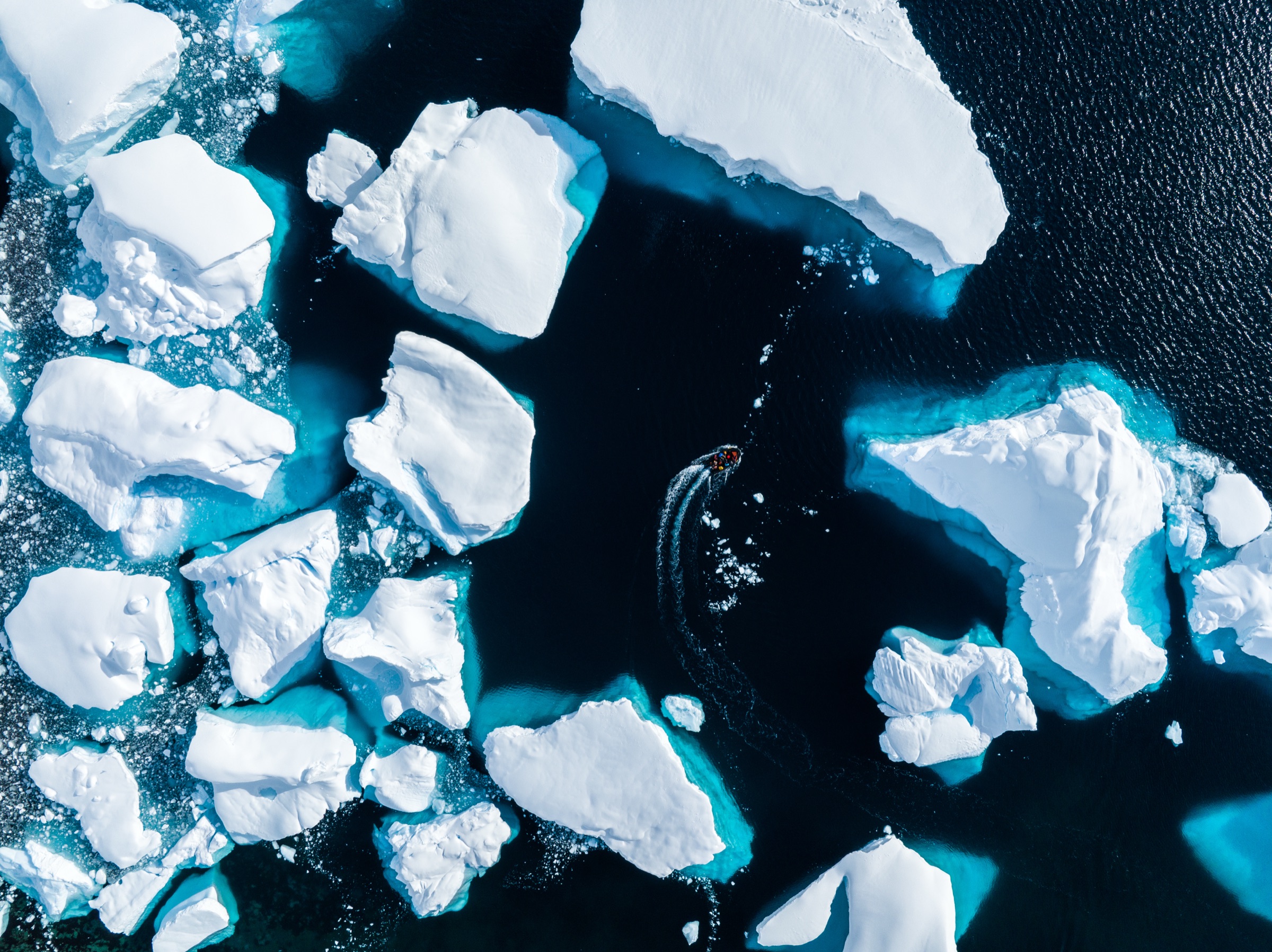
Glacier — tonal proxy.

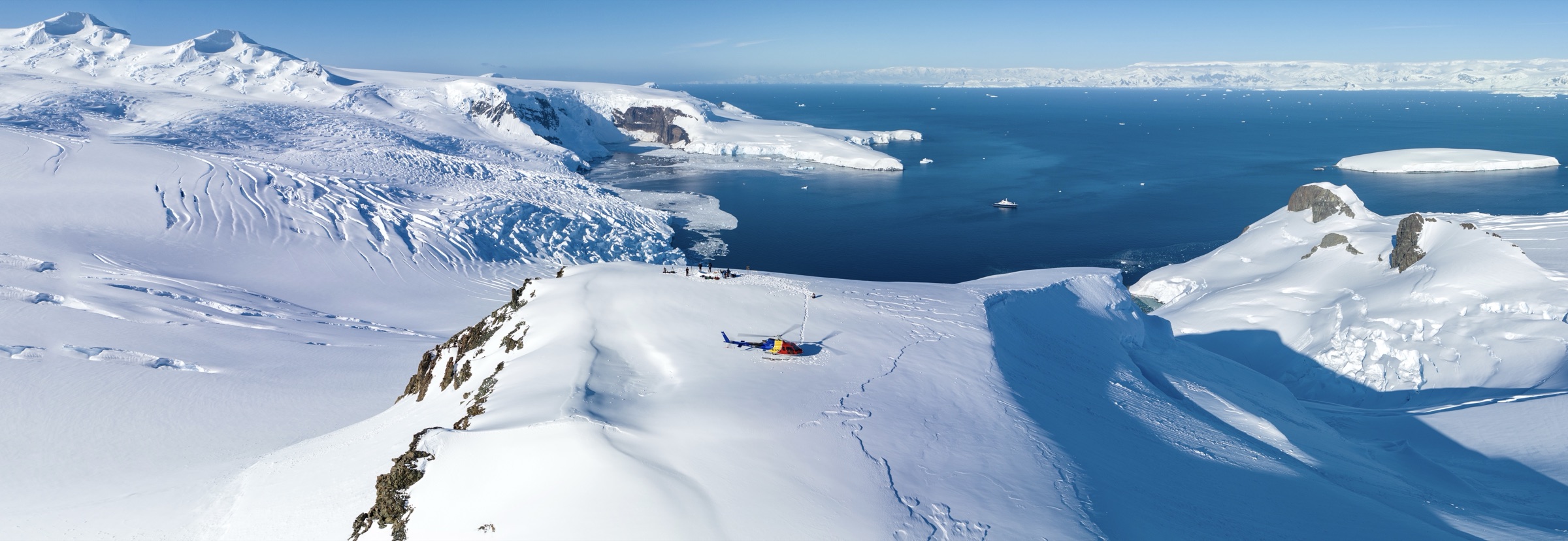
Tonal proxy — Antarctica, Stein Studios archive. Real photography only. Northern Ice Field plates arrive in September.


The new route

A different way up.

A short read of what the north side actually is — and what it changes.

Roughly 35,000 to 40,000 people climb Kilimanjaro every year. Almost all of them come up the south side — Marangu, Machame, the established commercial routes — and almost all of them exit the same crater rim at sunrise. The pressure on a small number of paths is the story most people inherit when they hear "Kilimanjaro." The north face is a different mountain.

Jim has been spending time on this north-side idea for several years now — six visits to the mountain across that window, a relationship with TANAPA, the park rangers, and the guides that's been built one season at a time. He's the catalyst. The park service and the guides flew the line from the air, walked the pieces, and stitched them together into a route that exists because Jim kept showing up to ask whether it could.

The structure of the climb itself: a camp at roughly 14,000 feet (Moir), 15,000 (Nyati), 17,000 (Advanced Base Camp), 18,800 (Crater Camp), summit at 19,341, helicopter extraction off Barafu at 16,000. Not technically severe. Just deliberately vertical and quiet in a way the south-side conga line never is.

The Reusch Ash Pit — the cinder cone, 140 metres deep, floor still warm — sits inside the crater as the geological centre of the film. The Lava Tower, the volcanic plug at 15,223 feet, sits as a play-beat on the way up. What the route does, beyond the climb itself, is open the possibility of a different relationship with the mountain for a different cohort of climber — and, eventually, take some weight off the south side.
Five threads

Five spines.

The film holds these five at once. None gets announced. None gets explained. We make sure not to accidentally collapse them into one.

Thread 1

The Route

A new path being authored in real time. Park service flew it. Guides stitched it together from fragments others had walked but never connected. Expedition history made, not retraced.

Thread 2

The Pressure & The Gift

Thousands of climbers a year on a small handful of routes. Opening a new north-side line is a quiet act of relief — and eventually a gift back to the park. A man who has built things his whole life helps build one more, then hands it over.

Thread 3

The Change

The crater, the cinder cone, the glacial remnants, the rock that's been hidden for 11,000 years and is, in real time, becoming visible. The mountain is moving — and the new route is what makes it possible to walk through what's moving.

Thread 4

The Lineage

Your niece, her boyfriend, possibly the two kids and a parent you took up Mount Kenya last year. Family on the mountain. The next generation watching an explorer move through terrain he taught himself to read.

Thread 5

The Self

A man who has done this a long time and still doesn't quite know how to say why he keeps going. The film doesn't try to answer that. It just stays close.

Tone — place, people, presence

The light of East Africa.
The witness frame.
The face the camera does not stage.

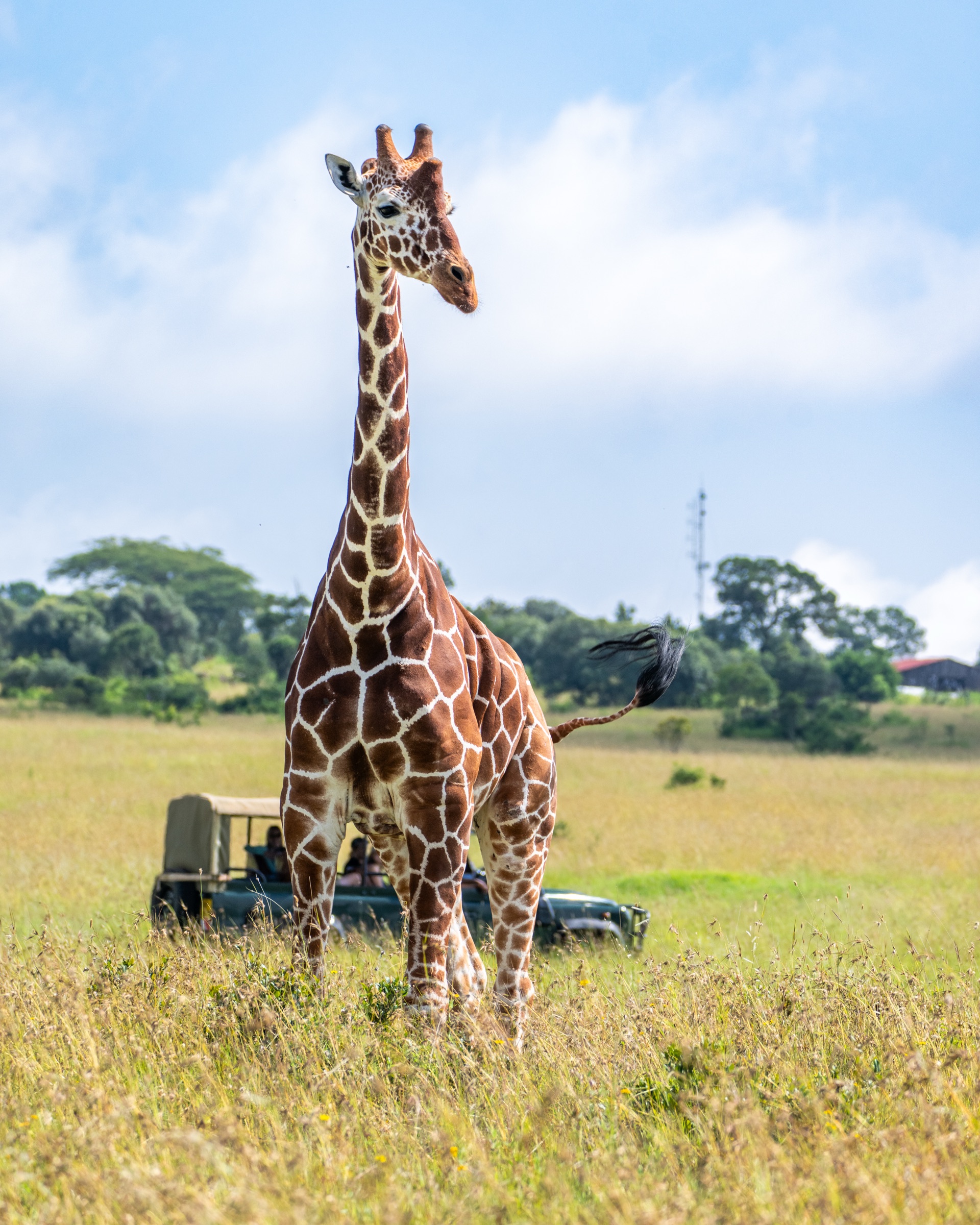
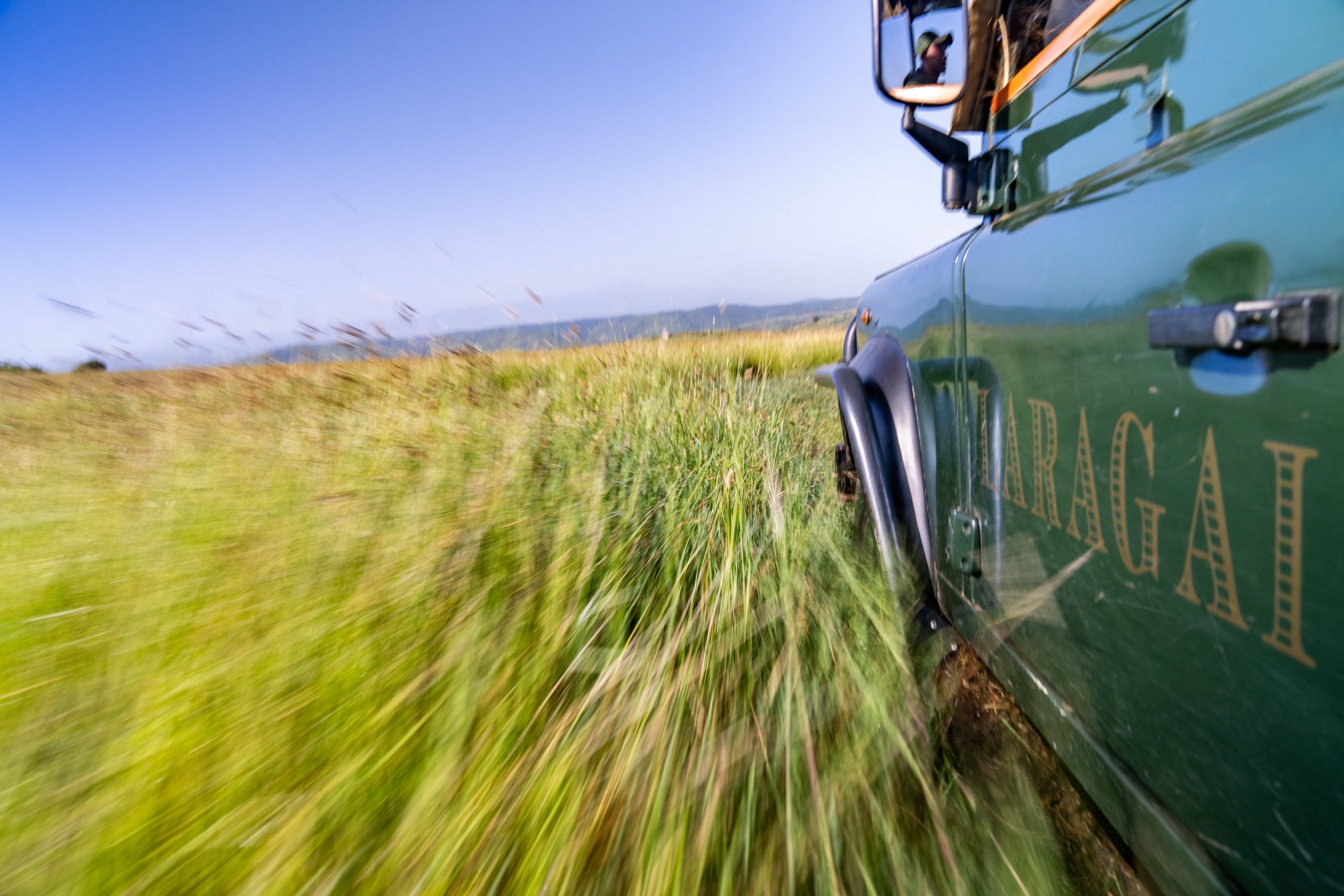
Stein Studios · Kenya 2024 · Expedition Terra.


Reference

Werner Herzog — the rhythm.

Herzog came up on our call as a reference — not the slow elephant-in-the-Okavango Herzog, but the one who makes a story unfold without needing a plot. That's the rhythm I have in mind: voice-led, geological time rather than action time, the narrator curious instead of heroic, the mundane carrying the weight.

A few reference films, when you have a moment

  1. Encounters at the End of the World — Werner Herzog, 2007 — the McMurdo material.
  2. Cave of Forgotten Dreams — Werner Herzog, 2010 — time around something old.
  3. Grizzly Man — Werner Herzog, 2005 — how an absent narrator carries a film.

Of these three, the one that feels closest to the rhythm you want would help me lock the edit grammar before we go.


A first storyboard

Twelve beats. Three movements.

A draft, not a lock. Reorder, cut, or rewrite anything. Beats earn their place by feel.

Movement I — Approach

00

Cold open · the cinder cone

Drone, very slow descent into the Reusch Ash Pit at first light. Tiny human silhouette for scale. The wind. Cut to black. Title card: date and route name.

Register · Disorientation → wonder

01

The introduction · in your own way

A short voiceover over archival — Mooney over the Atlantic, the early Arctic trips, Greenland. Not a résumé. The way you talk about it when no one's pressing — half answer, half deflection. The introduction is the rhythm, not the bio.

Register · Curiosity

02

The mountain everyone climbs

The 2019 reality of the standard south-side route. The conga line. The numbers. Why almost every Kilimanjaro story you've ever seen is one of seven paths up the same side — and what's worth questioning about that.

A question for Jim · do you have footage or stills from your earlier climbs we could use as playback here?

03

The Western Breach years

The earlier trips up the west side. The first sight of the crater. The cinder cone seen for the first time. The dawning idea that there might be another way up that nobody was using.

Register · The hook — a hidden world

04

The collaboration is born

The conversation with the guides and the park rangers. The helicopter scout. Topo maps. The first walk-through of what the route could be. The decision to bring the next group through it.

Register · Craft / conspiracy

Movement II — Altitude

05

Approach · Moir 14k → ABC 17k

The complicated pitch. Ropes. The walk. The first ice. Family establishing — niece, boyfriend, possibly the kids. First family voice on the mountain.

Register · Effort / belonging

06

Lava Tower interlude

Climb and rappel. A play-beat in the middle of a serious film. Hands on rock. Breath at altitude.

Register · Joy / release

07

ABC at 17k · the threshold

Quiet camp. Stars. Nobody else for miles. You alone, outside the tent, looking up. The film's heartbeat. The "kind of spiritual" register without needing to name it.

Register · Reverence

08

The ice field · the reason

Drone passes, slow and low. Ice on a remnant. If we have your earlier stills from this route, this is the beat where they'd live — your own record of what the place looked like a few seasons ago, against what it looks like now. The change inside one climber's lens.

Register · Awe / change

09

Crater Camp 18,800' · the cinder cone returned

Night. Lantern. The cinder cone at first light. Whether you descend into it on this trip becomes the film's quiet centre — the thing you've been looking down into for years.

Register · Suspended longing

Movement III — Release

10

Summit at first light · short

Quick. Almost anti-climactic. The summit isn't the climax — the ice fields and the cinder cone were. Just cold, breath, a single hand on the marker.

Register · Quiet completion

11

Descent + helo off Barafu at 16k

Rotor wash. The mountain receding. You looking back, not forward. Family in headphones, exhausted.

Register · Release

12

The handoff

Coda. The route, drawn as a line on a topo map, animating from start to finish. The implication — quietly carried, never narrated — is that what we've made here is theirs as much as it is yours. Whatever the guides or the park want to do with it from there is up to them.

Register · Inheritance

Runtime

10–12 minutes standard. 60-second trailer. Honestly hard to know exactly how long a film should be before any of it has been filmed — the duration follows the beats. If the material asks for more, it can have more. This is what we're planning for.


Shot ideas

A few ideas for shots that could carry parts of the film.

Not a shot list yet. Just three frames I've been thinking about, with one ask attached to each.

Idea 1

A through-time look at the ice

A still frame of the glacial remnants now, set against the same view from a few years ago. The change inside a single climber's lens — not as climate doom, just as honest geology you happen to have an archive of.

The ask · could you share your photos and footage from your earlier trips up here? Anything you have — phone, drone, stills, casual stuff — would be incredibly useful as we shape this.

Idea 2

The cinder cone from above

Drone, very slow descent into the Reusch Ash Pit at first light. Held long. This is the film's cold open if it works.

The ask · any footage or photos you have of the cinder cone from prior trips would be a huge help in planning the framing.

Idea 3

You and the people who built the route with you

A few quiet frames of you with the guides, the rangers, the park staff who've made this route real. The collaboration made visible — without staging it.

The ask · any footage or photos of you with the park staff and the guides from prior trips would be wonderful to look at.

Ice — tonal proxy.

Tonal proxy — Antarctica, Stein Studios archive. Held in place until the northern ice plates arrive in September.


A few questions

Where I'd love your read.

Nothing here is a checklist. A few things I'd love to think through together on our next call — your instincts on these will shape where this goes.

01

The rhythm

Of Encounters at the End of the World, Cave of Forgotten Dreams, and Grizzly Man — is there one that feels closest to the rhythm you're after? Helps me lock the edit grammar before we go.

02

Your archive

Would you be open to sharing whatever footage, drone material, and stills you have from your earlier trips up this route? Even rough stuff. The film gets a lot richer with that material woven in.

03

The guides

Would you be open to introducing me to your lead guide on a short call before we go? I'd love them to be characters in the film, not crew — and that starts with getting to know them a little before the camera is around.

04

The family

Any news on the two kids and the parent? The film adapts either way, but knowing the cast helps me think about the family thread.

05

The Rift Valley coda

If we end up with the morning of Sep 12, the Rift Valley is a wild closer — Lake Natron sits at a pH above 10, holding roughly three-quarters of the world's lesser flamingos on its soda islands. Sixteen kilometres south is Ol Doinyo Lengai, the only active carbonatite volcano on Earth — its lava is so cool it glows red only at night. Its 2007 eruption phase happened to begin on September 4, the same calendar date we begin.

Worth chasing as a coda, or worth saving for a different film someday?


What's next

From here to the mountain.

May 2026

A phone call between us — your current thoughts on this draft.

June

Next version of this story, with interview questions woven in.

July

First 45-minute recorded interview, and an intro call with your lead guide.

August

A second round of guide conversations if helpful.

Sep 4–12

Production.

Dec 24

Final delivery.


Looking forward to hearing your thoughts.

— Stein

Stein Studios · Forged by Nature · a clip from the middle.